
Neuropsychological vs Psychological vs Psychiatric Evaluation: Why the Difference Matters
Many individuals seeking answers for attention problems, memory concerns, learning difficulties, or emotional distress are told they need an "evaluation"—but the type of evaluation and the training of the provider matters. Neuropsychological, psychological, and psychiatric evaluations serve different purposes, and choosing the wrong evaluation—or the wrong level of specialization—can delay accurate diagnosis, treatment, and accommodations.
This guide explains the key differences so you can pursue the evaluation that actually answers your questions.
What Is a Neuropsychological Evaluation?
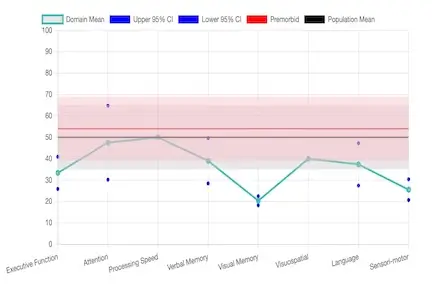
A neuropsychological evaluation is a comprehensive, brain-based assessment designed to understand how the brain is functioning. It objectively measures memory, attention, executive functioning, processing speed, language, visual-spatial skills, and learning using standardized tests interpreted within a neurological and medical framework.
Neuropsychological evaluations are commonly used to assess ADHD, learning disabilities, mild cognitive impairment (MCI), concussion, traumatic brain injury, stroke, epilepsy, Parkinson’s disease, and other neurological or complex diagnostic conditions. The goal is not simply diagnosis, but diagnostic precision—identifying patterns of cognitive strengths and weaknesses that reflect underlying brain systems.
Who Is Qualified to Conduct a Neuropsychological Evaluation?
While licensed psychologists may legally administer cognitive tests, a true neuropsychological evaluation is best conducted by a board-trained or fellowship-trained neuropsychologist. Neuropsychologists complete specialized postdoctoral training focused exclusively on brain–behavior relationships, neurological conditions, advanced psychometrics, and medical differential diagnosis.
Some generalist psychologists offer limited cognitive or ADHD testing. However, without formal neuropsychology training, interpretation may rely heavily on surface-level scores rather than integrated neurological patterns. This distinction becomes critical in cases involving subtle cognitive decline, high-functioning adults, multiple concussions, learning disorders, or overlapping psychiatric symptoms.
In short: All neuropsychologists are psychologists, but not all psychologists are neuropsychologists.
Common Reasons to Seek Neuropsychological Testing
- Memory loss or suspected cognitive decline
- Adult or pediatric ADHD, especially when prior diagnoses are unclear
- Learning disorders and academic underperformance
- Concussion, post-concussion syndrome, or head injury
- Differentiating anxiety, depression, burnout, or trauma from cognitive disorders
- School or workplace accommodations (IEP, 504, ADA)
What Is a Psychological Evaluation?
A psychological evaluation focuses primarily on emotional, behavioral, and personality functioning. It typically includes clinical interviews, symptom inventories, and questionnaires assessing mood, anxiety, trauma exposure, stress response, and personality traits.
Psychological evaluations are highly valuable for diagnosing and treating conditions such as depression, anxiety disorders, PTSD, adjustment disorders, and personality-related concerns. However, they usually involve limited objective testing of higher-order cognitive systems.
When individuals present with complaints such as poor memory, attention difficulties, academic struggles, or mental fatigue, a psychological evaluation alone may not fully explain whether the cause is emotional, neurological, or both.
What Is a Psychiatric Evaluation?
A psychiatric evaluation is a medically focused assessment conducted by a psychiatrist. Its primary purpose is to diagnose mental health conditions and determine whether medication is indicated. Psychiatric evaluations rely heavily on clinical interview, symptom history, and response to prior treatments.
Psychiatrists play a critical role in managing conditions such as depression, anxiety, bipolar disorder, psychotic disorders, and ADHD. However, psychiatrists typically do not conduct comprehensive cognitive or learning-based testing and may refer patients for neuropsychological evaluation when diagnostic clarity is needed.
Side-by-Side Comparison
Neuropsychological Evaluation: Conducted by a neuropsychologist; focuses on brain-based cognition, objective testing, neurological conditions, learning disorders, ADHD, concussion, and cognitive decline.
Psychological Evaluation: Conducted by a psychologist; focuses on emotional functioning, personality, mood, trauma, and behavioral patterns.
Psychiatric Evaluation: Conducted by a psychiatrist; focuses on diagnosis and medication management based on symptoms and medical history.
Which Evaluation Do You Need?
You may benefit most from a neuropsychological evaluation if you are experiencing cognitive symptoms, academic or occupational performance decline, or diagnostic uncertainty despite prior therapy or medication. Psychological or psychiatric evaluations may be appropriate when concerns are primarily emotional or when medication decisions are the primary goal.
Many individuals ultimately benefit from a collaborative approach. A comprehensive neuropsychological evaluation often provides the objective foundation that informs effective psychiatric treatment and psychological care.