Neuropsychologist vs Neurologist vs Psychiatrist: Why the Confusion?
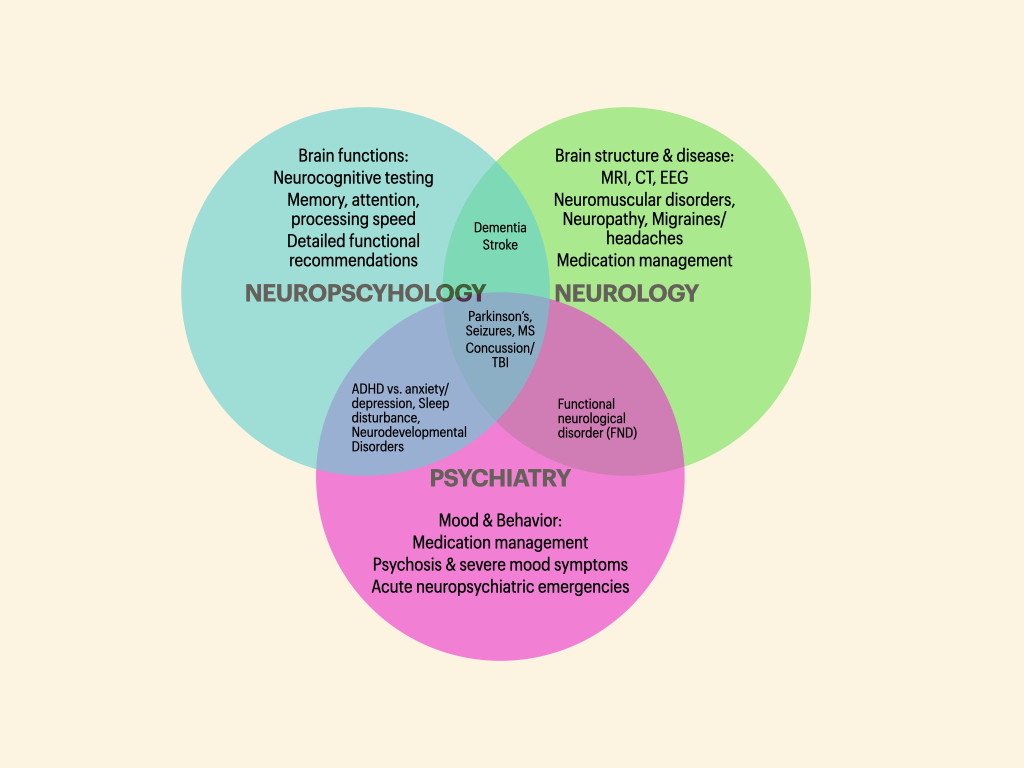
Many people feel unsure about which specialist to see when experiencing memory loss, attention problems, anxiety, mood changes, or unexplained cognitive decline. Although neuropsychologists, neurologists, and psychiatrists all work with the brain, their training, tools, and roles differ significantly. Here's a clear breakdown to help you choose the right professional.
What Is a Neuropsychologist?
A Neuropsychologist is a doctoral-level psychologist (Ph.D. or Psy.D.) with specialized postdoctoral training in clinical neuropsychology, focusing on the connection between brain function and behavior. They are experts in measuring the consequences of brain conditions on thinking skills, personality, and emotion. Neuropsychologists do not prescribe medication [1-2,7].
Key Focus: Brain Function and Cognitive Measurement
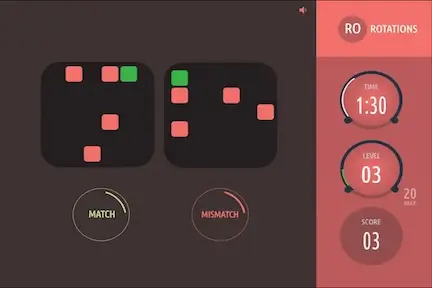
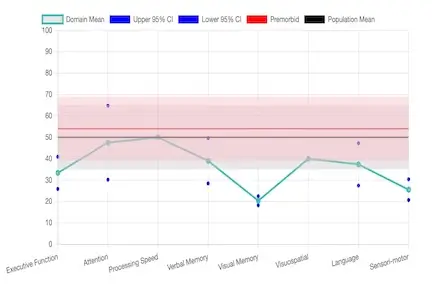
- Conduct comprehensive cognitive assessments: They use standardized tests (often lasting several hours) to produce objective scores across specific domains like attention, memory, language, and executive function.
- Diagnose cognitive disorders: They diagnose conditions such as Mild Cognitive Impairment (MCI), specific dementias, ADHD, and learning disorders by identifying patterns of strengths and weaknesses.
- Differential Diagnosis: They distinguish between neurological causes (e.g., TBI, stroke) and psychiatric causes (e.g., depression, anxiety) that may be mimicking cognitive decline.
- Rehabilitation and Planning: They provide tailored cognitive rehabilitation strategies, educational recommendations, and support for treatment planning [3,8].
Best For Referral When the Primary Concern is:
What Is a Neurologist?
A Neurologist is a medical doctor (MD or DO) who diagnoses and treats diseases of the central and peripheral nervous system using imaging, laboratory tests, and medications [4]. They focus on the physical structure and pathology of the brain and nerves.
Key Focus: Brain Structure and Pathology
- Medical Testing: Order and interpret MRIs, CT scans, EEGs (brain electrical activity), spinal taps, and bloodwork to look for structural or chemical abnormalities.
- Diagnose and Treat Neurological Diseases: Treat conditions such as Multiple Sclerosis (MS), Parkinson’s disease, epilepsy (seizures), stroke, chronic migraines, and brain tumors.
- Intervention: Prescribe medication specifically for neurological symptoms and manage medical treatments or procedures.
Best For Referral When the Primary Concern is:
- Sudden onset symptoms like loss of sensation, muscle weakness, or paralysis.
- Seizures or unexplained tremors/movement disorders.
- Stroke or Transient Ischemic Attack (TIA).
- Multiple Sclerosis (MS) or Amyotrophic Lateral Sclerosis (ALS).
- Severe, chronic headaches or migraines.
What Is a Psychiatrist?
A Psychiatrist is a medical doctor (MD or DO) specializing in mental health, mood disorders, and behavioral conditions. Psychiatrists diagnose through clinical interviews and are the primary providers who prescribe psychiatric medications [5-6].
Key Focus: Mental Health, Mood, and Behavior
- Medication Management: Diagnose and prescribe treatment for conditions like depression, anxiety, bipolar disorder, and psychotic disorders.
- Psychiatric Diagnosis: Assess symptoms related to severe mood dysregulation, thought disorders, or debilitating anxiety.
- Therapy: Some psychiatrists provide psychotherapy (talk therapy), though their primary role is often medication management.
Best For Referral When the Primary Concern is:
- Major or persistent depression, chronic anxiety, or panic attacks.
- Bipolar disorder or severe mood instability.
- Post-Traumatic Stress Disorder (PTSD) or Obsessive-Compulsive Disorder (OCD).
- Psychosis or active hallucination/delusion management.
Comparative Summary: Neuropsychologist vs. Neurologist vs. Psychiatrist
| Specialist |
Training |
Primary Tool |
Main Focus |
| Neuropsychologist |
Ph.D./Psy.D. + Postdoc |
Standardized Cognitive Testing |
Brain Function (Thinking, Memory, Behavior) |
| Neurologist |
Medical Doctor (MD/DO) |
Scans (MRI, EEG) & Lab Tests |
Brain Structure and Nervous System Pathology |
| Psychiatrist |
Medical Doctor (MD/DO) |
Clinical Interview & Medication |
Mental Health (Mood, Emotion, Behavioral Control) |
Collaboration in Complex Cases
While their roles differ, these specialists frequently work together to optimize patient care, especially in complex neurodegenerative or brain injury cases [9-10].
- Memory Clinic Scenario (Dementia): A Neurologist performs an MRI to rule out a structural cause like a tumor; a Neuropsychologist performs detailed testing to confirm the pattern of cognitive decline (MCI or specific dementia type); a Psychiatrist manages the associated behavioral symptoms like agitation or depression.
- Traumatic Brain Injury (TBI): A Neurologist treats the initial injury and manages headaches; a Neuropsychologist measures the specific cognitive deficits (e.g., attention, processing speed) and guides the school or employer on return-to-activity strategies.
- Adult ADHD: A Neuropsychologist performs the comprehensive testing to diagnose and rule out other causes (like sleep apnea or anxiety); a Psychiatrist or PCP uses the report to prescribe and manage ADHD medication.
Bottom Line: Who Should You See First?
If your primary concern is memory, concentration, executive function, or unexplained 'brain fog,' start with a Neuropsychologist. They can provide the objective measurement of cognitive change. If testing suggests a neurological disease or medication need, the Neuropsychologist will refer you to a Neurologist or Psychiatrist. For sudden neurological symptoms (seizures, tremors, paralysis), begin with a Neurologist. For primary concerns regarding mood, anxiety, or emotional changes, consult a Psychiatrist.
References
- Schroeder RW, Martin PK, Walling A. Neuropsychological Evaluations in Adults. Am Fam Physician. 2019;99(2):101-108.
- Del Bene VA, Gerstenecker A, Lazar RM. Formal Neuropsychological Testing: Test Batteries, Interpretation, and Added Value in Practice. Clin Geriatr Med. 2023;39(1):27-43. doi:10.1016/j.cger.2022.07.003.
- Michels TC, Tiu AY, Graver CJ. Neuropsychological Evaluation in Primary Care. Am Fam Physician. 2010;82(5):495-502.
- Milligan TA. Diagnosis in Neurologic Disease. Med Clin North Am. 2019;103(2):173-190. doi:10.1016/j.mcna.2018.10.011.
- National Library of Medicine (MedlinePlus). Mental Health Screening.
- National Library of Medicine (MedlinePlus). Depression Screening.
- American Academy of Clinical Neuropsychology (AACN) Practice Guidelines for Neuropsychological Assessment and Consultation. Clin Neuropsychol. 2007;21(2):209-231. doi:10.1080/13825580601025932.
- Block C, Santos OA, Flores-Medina Y, Rivera Camacho DF, Arango-Lasprilla JC. Neuropsychology and Rehabilitation Services in the United States. Arch Clin Neuropsychol. 2017;32(3):369-374. doi:10.1093/arclin/acx002.
- Özge A, Domaç FM, Tekin N, et al. One Patient, Three Providers: A Multidisciplinary Approach. J Clin Med. 2023;12(17):5754. doi:10.3390/jcm12175754.
- Medeiros GC, Turkel S, Brownlowe K, et al. When Mind Meets the Brain: Essentials of Well-Coordinated Management. J Acad Consult-Liaison Psychiatry. 2021;62(3):270-284. doi:10.1016/j.jaclp.2021.01.001.