What Is Forensic Neuropsychology?
Forensic neuropsychology is the application of brain-behavior science to legal questions. Unlike clinical evaluations designed for treatment planning, forensic neuropsychological evaluations are conducted with the explicit purpose of informing courts, attorneys, insurers, and fact-finders. These assessments address questions of causation, credibility, functional impairment, and capacity using standardized, scientifically grounded methods.
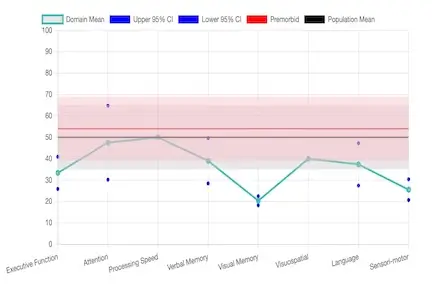
Common referral questions include whether a claimed cognitive or psychological injury is consistent with known neuropathology, whether symptoms are exaggerated or feigned, and how neurocognitive deficits affect real-world functioning. This often involves a deep dive into comprehensive neurocognitive testing to establish a clear baseline of functioning.
Legal Contexts Requiring Forensic Neuropsychological Evaluation
Neuropsychologists are retained in a wide range of civil, criminal, and administrative matters, including:
In each context, the neuropsychologist’s role is to provide an objective, methodologically sound opinion—not advocacy for either party.
How Forensic Neuropsychological Evaluations Differ From Clinical Assessments
Forensic evaluations differ fundamentally from treatment-focused assessments. They require heightened attention to test security, response validity, collateral data, and alternative explanations for symptoms. While a school-based ADHD or learning disability evaluation focuses on support, a forensic evaluation must withstand scrutiny under cross-examination and adhere to strict professional and legal standards.
Key distinguishing features include:
- Use of performance validity and symptom validity testing
- Integration of medical records, depositions, surveillance, and collateral sources
- Explicit analysis of causation and temporal relationships
- Clear articulation of assumptions, limitations, and confidence levels
- Neutral, non-therapeutic examiner role
Navigating Florida Legal Standards: Daubert and Rule 1.360
In Florida, the admissibility of expert testimony is governed by the Daubert standard. This requires that a neuropsychologist’s testimony be based on sufficient facts or data and be the product of reliable principles and methods. A forensic neuropsychology evaluation in Florida must be meticulously documented to survive a Daubert challenge, ensuring the methodology used is generally accepted within the scientific community.
Furthermore, many forensic cases involve a Compulsory Medical Examination (CME) under Florida Rule of Civil Procedure 1.360. Unlike a standard clinical visit, these examinations are court-ordered or contractually required. Our practice ensures full compliance with Rule 1.360 guidelines, providing all raw data to the opposing expert when required while maintaining the highest standards of test security and integrity.
Assessing Credibility, Effort, and Malingering
One of the most critical contributions of forensic neuropsychology is the objective assessment of response validity. Standardized validity measures—including Performance Validity Tests (PVTs) and Symptom Validity Tests (SVTs)—allow examiners to determine whether test results reflect genuine cognitive limitations or non-credible effort. This is particularly vital when evaluating high-stakes claims in high-performance professionals where subtle deficits must be distinguished from normal variations.
Validity assessment is not an accusation; it is a scientific safeguard. Courts rely on these methods to differentiate authentic neurocognitive impairment from psychological distress, secondary gain, or malingering. By utilizing multiple embedded and stand-alone validity indicators, we provide an evidence-based foundation for our conclusions.
The Importance of In-Person Forensic Evaluations
While tele-neuropsychology protocols are highly effective for clinical evaluation, in-person testing remains the gold standard for forensic contexts. In-person administration allows for:
- Strict Test Security: Preventing the unauthorized recording or distribution of standardized test materials.
- Direct Behavioral Observation: Capturing subtle non-verbal cues, fatigue, and effort that cannot be fully assessed via video.
- Admissibility: Reducing potential legal arguments regarding the "limitations" of remote administration during cross-examination.
The Physician-Led Difference in Forensic Cases
In high-stakes litigation, the credentials and methods of the examiner are under the microscope. A physician-performed neuropsychological evaluation ensures that every minute of testing is observed by the expert who will eventually testify. This eliminates the "middleman" issue common in high-volume clinics. Direct observation by the neuropsychologist leads to more robust, credible, and defensible testimony at deposition or trial.
Conclusion: Informed Decisions Through Science
Forensic neuropsychological evaluation provides the legal system with the data necessary to resolve complex questions about the human brain. Whether addressing a personal injury claim, a capacity determination, or high-IQ validation for legal or professional purposes, our goal is to provide clarity through objective science.
Request a Forensic Neuropsychology Consultation